




The terror attack in Pahalgam that claimed the lives of 26 individuals has once again highlighted the persistent threat of terrorism in the region. The militants struck on a day that was meant to be peaceful in the scenic town of Pahalgam. The town is renowned for its beauty and tranquility. They targeted a congregation of civilians and security forces, killing many innocent people.” “The militants reportedly coordinated the attack well, displaying a grim reminder of the lurking dangers in the region.”
This tragedy not only shook the local community but also drew significant international attention and condemnation. The recent Pahalgam terror attack happened on April 22, 2025. It took place in the picturesque Baisaran Valley of Pahalgam, Jammu and Kashmir. This event has sent shockwaves across the globe. Militants affiliated with The Resistance Front carried out this barbaric terrorist attack. It targeted innocent tourists. At least 28 lives were tragically lost. More than 20 others were injured.
The attack is one of the deadliest in the region. This has been the case since the revocation of the special status of Jammu and Kashmir. It has once again highlighted the ongoing insurgency. The attack also underscores the complex geopolitical tensions in the area.
deeply impacts humanity and the progress of Kashmir.
We grapple with the aftermath of this horrific event. Understanding its broader implications is essential. It deeply impacts humanity and the progress of Kashmir. The statement that this attack is an assault on humanity and Kashmir’s progress is not merely a rhetorical expression. It encapsulates the deep-seated concerns. There is an urgent need for collective action against such acts of terror.
Prime Minister Narendra Modi, along with other global leaders, has condemned this heinous act. This includes US President Donald Trump and Russian President Vladimir Putin. They underscored the international community’s solidarity with India in its fight against terrorism. The outpouring of condolences from world leaders is significant. Leaders from Nepal, Saudi Arabia, and the UAE reflect a unified stance against such atrocities. They demonstrate a commitment to supporting the victims and their families.
Pahalgam Terror Attack ; Many of the injured were evacuated using helicopters
The Pahalgam terror attack has resulted in a devastating toll on human life. At least 26 people, predominantly tourists, lost their lives in this brutal assault.
The victims included individuals from various parts of India, such as Maharashtra, Karnataka, Kolkata, and even a local from Pahalgam. Among the deceased was a 26-year-old lieutenant of the Indian Navy from Haryana. He had recently gotten married. This highlights the tragic and personal nature of these losses.
Besides the fatalities, several tourists were injured, with reports indicating that at least 12 were wounded. The severity of the injuries varied. Many of the injured were evacuated using helicopters. Local assistance, like ponies, helped to bring them down from the meadows to medical facilities.
Pahalgam Terror Attack : Psychological Impact on Local Populace and Tourists
The psychological impact of this terror attack is profound and far-reaching. For the local populace of Pahalgam, this incident has reignited fears and anxieties. These fears had begun to dissipate as the region witnessed a surge in tourist arrivals after years of militancy. The attack occurred in a high-security zone. Tourists felt relatively safe there. This has shattered the sense of security and tranquility that the area had been known for.
Local residents heavily depend on tourism for their livelihood. They are now grappling with the uncertainty and fear that such attacks instill.
For the tourists who survived the attack, the trauma is likely to be long-lasting. The attack’s sudden and brutal nature has left deep psychological scars. Terrorists fired indiscriminately for about 20 minutes.
The survivors, including the family of the deceased Intelligence Bureau official from Bihar, will need extensive support and counseling to cope with the trauma they experienced. The attack has also raised concerns among potential tourists, who may now think twice before visiting the region, further exacerbating the psychological and economic impact on the local community.
Pahalgam Terror Attack : The Assault on Kashmir’s Development, Economic Setbacks
The Pahalgam terror attack has severely impacted the economic framework of Jammu and Kashmir, particularly its flourishing tourism sector. The region, which had been witnessing a surge in tourist arrivals, saw its lively hill stations and bustling markets turn into deserted areas almost overnight.
“The attack occurred when houseboats, homestays, guest houses, and hotels across the region, including Srinagar, were fully booking accommodations, reflecting a strong tourist season.”
The economic consequences are extensive, with many locals who had heavily invested in the tourism industry now facing severe uncertainty. Hoteliers, Shikara riders, and vendors, many of whom had taken loans or sold personal assets like jewelry and land to fund their businesses, are now struggling with declining visitor numbers and increasing debts.
This disruption threatens to undo years of cautious optimism in the region’s tourism sector, which has been a cornerstone of Kashmir’s economic stability.
Stalling Infrastructure Projects
In addition to the immediate economic impact, the Pahalgam terror attack poses a serious risk to ongoing infrastructure development projects in Jammu and Kashmir. Since the revocation of its autonomous status in August 2019, the region has seen significant investments in infrastructure. However, such acts of terror can discourage investors and halt the progress of these projects, impeding the region’s overall development.
Analysts suggest that the strategic intent behind the attack includes reversing the tangible economic and social advancements made in Kashmir. By fostering instability and chaos, the perpetrators aim to undermine the Indian government’s efforts to fully integrate Kashmir with the rest of the country and to foster economic growth and development in the region.
This could result in delays in implementing various development projects, further worsening the economic and social challenges faced by the people of Kashmir.
Political Repercussions and the Call for Unity
The Pahalgam terror attack has profound implications for the political stability of Jammu and Kashmir. It has exposed vulnerabilities in the region’s security apparatus and highlighted ongoing challenges in maintaining peace and stability.
This attack occurred at a time when the Indian government had been emphasizing the return of normalcy in Kashmir following the revocation of Article 370 in 2019. The incident disrupts that narrative, emphasizing the persistent threat of terrorism and the urgent need for enhanced security measures.
Political unity in the wake of this tragedy is evident, as opposition leaders and local political parties have come together to condemn the attack. Congress MP K.C. Venugopal and Jammu and Kashmir Pradesh Congress Committee President Tariq Hameed Karra participated in a tribute ceremony in Srinagar, showcasing a unified front against terrorism.
Such solidarity is essential for maintaining social cohesion and reinforcing the collective resolve to combat terror.
National and International Responses
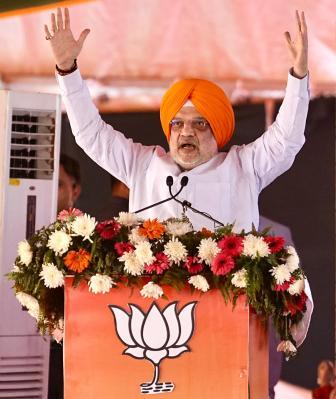
The national response to the Pahalgam terror attack has been swift and decisive. Union Home Minister Amit Shah immediately condemned the attack and assured that the perpetrators would face the harshest consequences. Shah chaired a high-level security meeting in Srinagar, bringing together multiple agencies to review intelligence inputs and coordinate the response.
“Security forces have deployed additional troops across south Kashmir and launched a multi-state operation to track down the perpetrators and dismantle their network.
Prime Minister Narendra Modi also condemned the attack, reaffirming India’s unwavering resolve to fight terrorism. “Modi spoke with Amit Shah over the phone to discuss the situation and ensure that authorities take all necessary measures to bring the culprits to justice. The Lieutenant Governor of Jammu and Kashmir, Manoj Sinha, strongly condemned the attack and promised that the government would hold those responsible accountable.”
On the international stage, the attack has elicited widespread condemnation. Indian-American politicians, including Vivek Ramaswamy and Ro Khanna, have expressed their solidarity with the victims’ families and reiterated their commitment to combating terrorism.
The unified stance of the global community against such acts of terror underscores the international consensus on the need for collective efforts to combat terrorism.
Conclusion: Reflecting on the Path Forward
The Pahalgam terror attack serves as a stark reminder of the ongoing threats to peace and stability in Jammu and Kashmir. The devastating loss of life is profound. Survivors endure psychological trauma. Economic setbacks also highlight the urgent need for collective action against terrorism. Such attacks are not merely assaults on individuals but on humanity and the region’s progress.
As Union Home Minister Amit Shah stated, “Bharat will not bend to terror,” it is essential that we remain united in our determination to combat terrorism“This includes supporting the survivors, ensuring the perpetrators face justice, and striving to create a safer and more prosperous Kashmir for everyone.”
The Pahalgam terror attack was a dark moment in the region’s history, but it also served as a reminder of the global threat that terrorism poses. “People both locally and internationally mourn the loss of 26 lives, as authorities work to strengthen security and restore peace.” Hope remains that with concerted efforts, Pahalgam will rise again as a beacon of beauty and tranquility.






Leave a Reply